
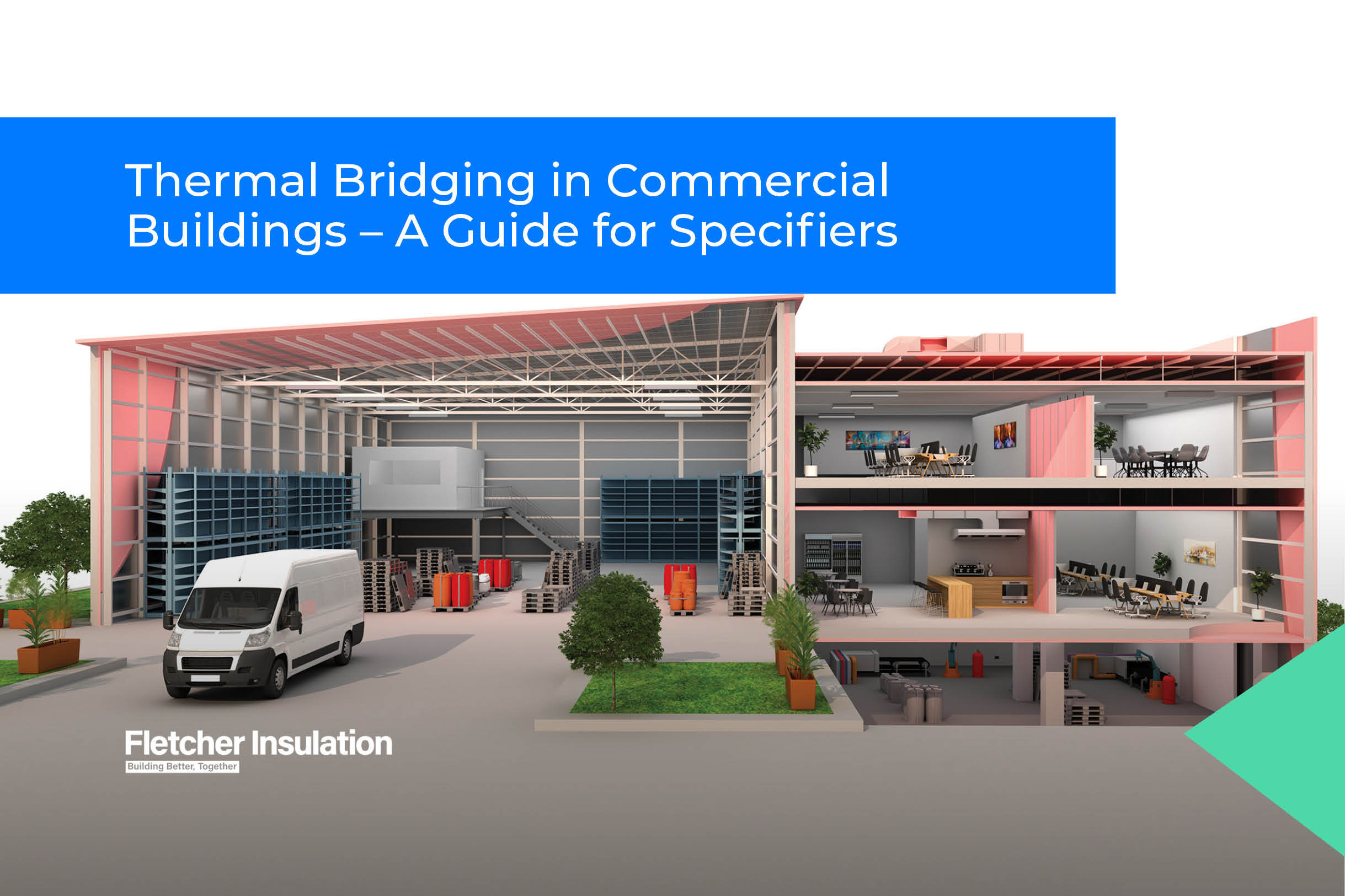
Thermal bridging occurs when heat bypasses insulation through more conductive materials or structural elements within the building envelope. While often considered a detailing issue, its impact extends far beyond individual components – influencing whole-building performance, energy efficiency and occupant comfort.
In commercial buildings, unaddressed thermal bridging can reduce the effectiveness of insulation, increase heating and cooling demand, and contribute to higher operational energy use and associated greenhouse gas emissions. It can also affect internal surface temperatures, with implications for indoor environmental quality and condensation risk.
This CPD Live session explores thermal bridging within the context of NCC Volume One, with a focus on Deemed-to-Satisfy compliance pathways commonly used in commercial construction.
It examines how thermal bridging is considered in Total R-Value and Total System U-Value calculations, and why accounting for these effects is essential to achieving compliance with Section J. Our speakers also outline where thermal bridges typically occur within building envelopes and highlight practical design considerations to minimise their impact.
At the end of this presentation, participants will be able to:
- Define thermal bridging and explain how it occurs in commercial building assemblies
- Identify common locations where thermal bridging occurs
- Explain how thermal bridging influences Total R-Value and Total System U-Value calculations
- Outline the role of thermal bridging in NCC Section J compliance
- Apply design considerations to reduce the impact of thermal bridging on building performance.
(PRACTICE MANAGEMENT AND PROFESSIONAL CONDUCT PC10, PRACTICE MANAGEMENT AND PROFESSIONAL CONDUCT PC12, PROJECT INITIATION AND CONCEPTUAL DESIGN PC31, PROJECT INITIATION AND CONCEPTUAL DESIGN PC35)
SPEAKER

Mitchell Cavanagh, Technical Manager, Fletcher Insulation
Mitchell Cavanagh is the Technical Manager at Fletcher Insulation, responsible for providing technical advice on insulation solutions to meet the range of requirements for architectural projects. In his role Mitchell collaborates closely with architects, builders, engineers, and contractors to ensure Fletcher Insulation’s recommended insulation solutions meet and exceed project demands and comply with the stringent NCC requirements.
Mitchell has over 8 years of experience in the insulation industry and currently sits on various industry and standards committees.
Before joining Fletcher Insulation, Mitchell gained experience as an account manager in the lighting industry. His strong background in project management, sales and customer account management allows him to seamlessly apply his expertise in delivering the right insulation solutions to architects and designers.