
Understanding & Enhancing Weathertightness in Facades
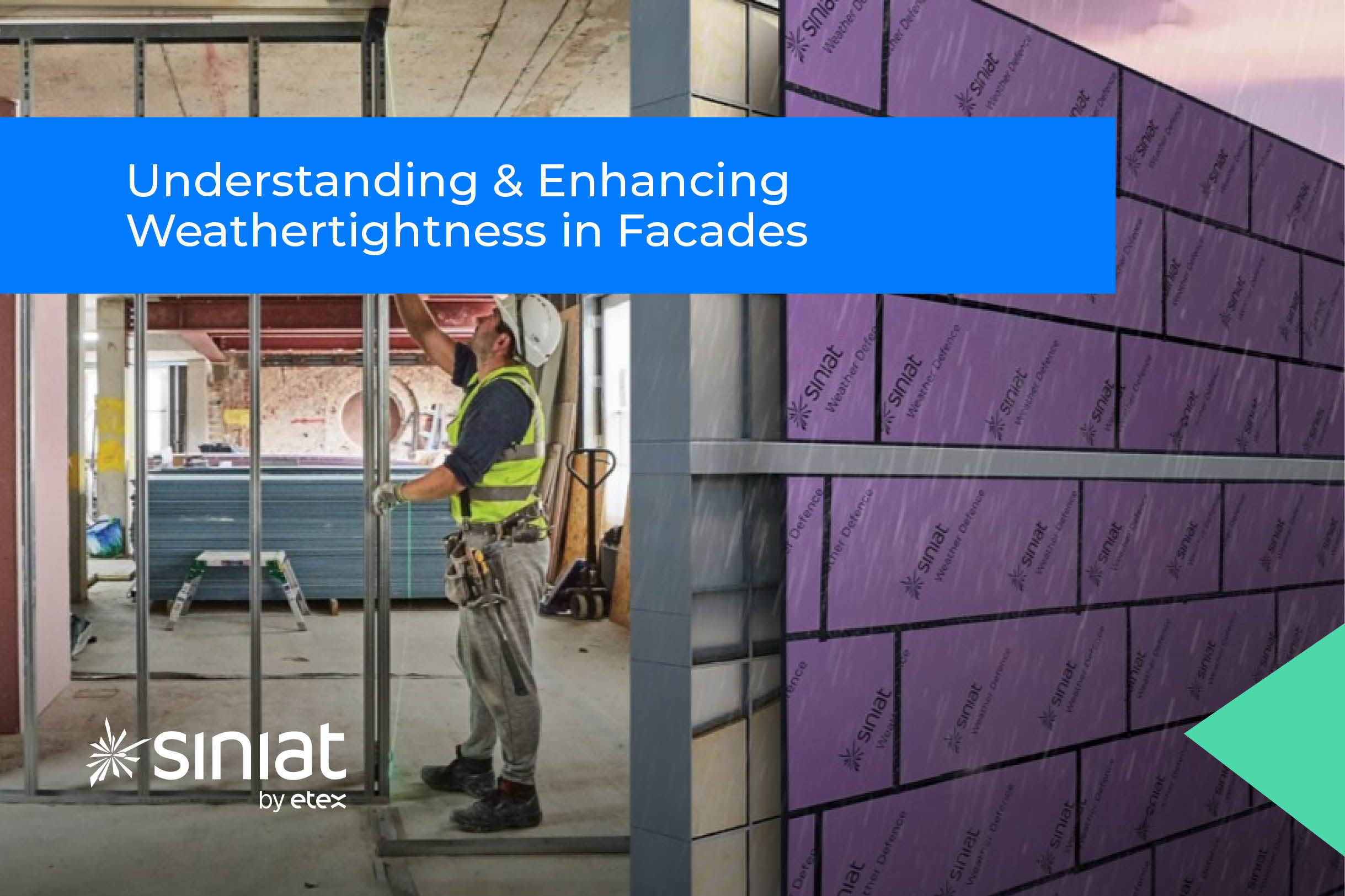
Distinct from airtightness, weathertightness refers to a building’s capacity to protect itself from external weather conditions, as a means of reducing air/water intrusion and the presence of moisture in the building envelope.
The reason weathertightness is important, and the reason architects should seek to create barriers against inclement weather, is that it helps to protect the structural integrity of the building in question. It prevents the accumulation of moisture within walls, which if left unchecked can lead to material deterioration, mould growth, and reduced thermal performance.
In this context, this session of CPD Live is devoted to “Understanding and Enhancing Weathertightness in Façades”. Beginning by explaining the differences between weathertightness and airtightness, our speakers will identify the common sources of air leakage in façades as well as their impacts on building performance.
They will identify all the relevant regulatory requirements; shine a light on weathertightness strategies, techniques, materials, and solutions; and explain all you need to know to improve the weathertightness of new and existing façades.
At the end of this presentation, you should be able to:
- Define weathertightness in building façades and explain the difference between it and airtightness
- Display an understanding of waterproofing and condensation management
- Identify common sources of air leakage in façades and outline their impact on building performance
- Identify weathertightness solutions that are suitable for different types of façades
(PRACTICE MANAGEMENT AND PROFESSIONAL CONDUCT PC12, PROJECT INITIATION AND CONCEPTUAL DESIGN PC28, DETAILED DESIGN AND CONSTRUCTION DOCUMENTATION PC45)