
Fire Resistance in Concrete Structures – Lightweight Solutions for Building Refurbishment Under NCC 2025
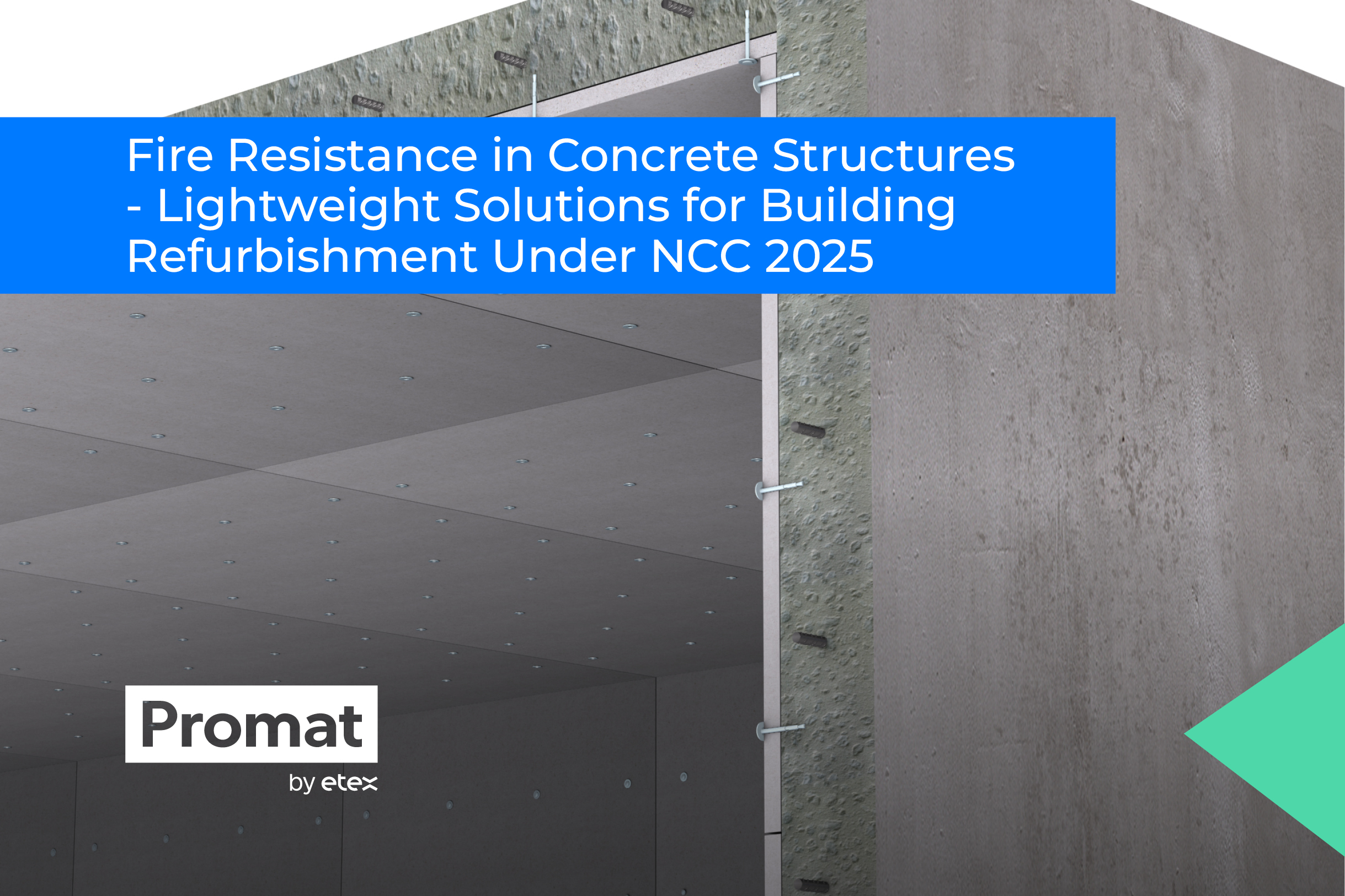
Under the National Construction Code (NCC), building refurbishment and changes tend to trigger increases in required Fire Resistance Levels (FRLs).
Open-deck carparks and certain sprinkler-protected are good examples. Until recently, buildings of this type benefited from FRL concessions that reduced or eliminated fire resistance obligations on their structural concrete elements.
NCC 2025 has removed these concessions for open-deck carparks that form part of Type A and Type B construction and for sprinkler-protected carparks located beneath another building classification in Type A construction.
This means that, as states and territories adopt NCC 2025, existing structures being converted or upgraded will increasingly face FRL requirements their original concrete structure was never designed to meet.
In this session of CPD Live, we consider the various ways to meet these new requirements. Outlining the conventional response to FRL increases – namely the addition of concrete mass through recasting or cementitious render – our speakers will also explain the costs of this approach.
They will identify lightweight passive fire protection systems, such as boards, sprays, and intumescent coatings as practical and effective alternatives in this context; and outline what you need to know to include them in projects of this type.
At the end of this presentation, you should be able to:
- Outline the fire safety regulations that apply to the construction of concrete structures in Australia
- Identify changes in the way NCC 2025 addresses the issue of fire safety in concrete structures such as carparks, and explain the practical implications of these changes
- Explain why the addition of concrete is not always an effective means of addressing an FRL shortfall
- Outline the role of passive fire protection methods in ensuring concrete structures comply with fire safety requirements
This presentation will deliver outcomes related to the following Competency/s from the National Standard of Competency for Architects 2021:
PC 12 – PRACTICE MANAGEMENT AND PROFESSIONAL CONDUCT
Provide independent, culturally responsive and objective advice in accordance with relevant building codes, standards, technical specifications and guidelines, and planning regulations, including climate change implications, across all aspects of architectural practice.
PC 28 – PROJECT INITIATION AND CONCEPTUAL DESIGN
Be able to draw on knowledge from building sciences and technology, environmental sciences and behavioural and social sciences as part of preliminary design research and when developing the conceptual design to optimise the performance of the project.
PC 39 – DETAILED DESIGN AND CONSTRUCTION DOCUMENTATION
Be able to integrate the material selection, structural and construction systems established in the conceptual design into the detailed design and documentation.
PC 42 – DETAILED DESIGN AND CONSTRUCTION DOCUMENTATION
Be able to prepare planning applications that comply with planning regulations

Peter Butler
Head of Technical Services at Promat
Peter has been working at Promat Australia for 25 years in various capacities from customer service, technical support and management . He is currently the Head of Technical Services and oversee all the testing and approvals for Promat’s products and systems along with the technical support of our commercial team and customers. He is also a member of the Australian Standards Committee for Fire Protection (FP18) and a member of the Technical Advisory Committee for Passive Fire within Fire Protection Association Australia.

Dr Imran Ahamed
Director at Fyrlink
Dr Imran Ahamed is a structural fire engineer and passive fire protection specialist with extensive experience in fire testing, technical assessments and performance-based structural fire engineering.
He has a comprehensive understanding of Australian and international fire testing and assessment standards and has overseen large-scale programs evaluating the fire-resistance performance of passive fire protection systems. His experience includes coordinating fire testing, preparing technical assessments and supporting product certification and regulatory compliance.
Imran also has significant experience in performance-based structural fire engineering for a wide range of buildings and structural systems, including steel, concrete, mass timber and composite construction. He has contributed to numerous structural fire engineering projects in Australia and internationally, developing safe, practical and cost-effective design solutions.