
Decoding Carbon – Turning Data into Better Design Decisions
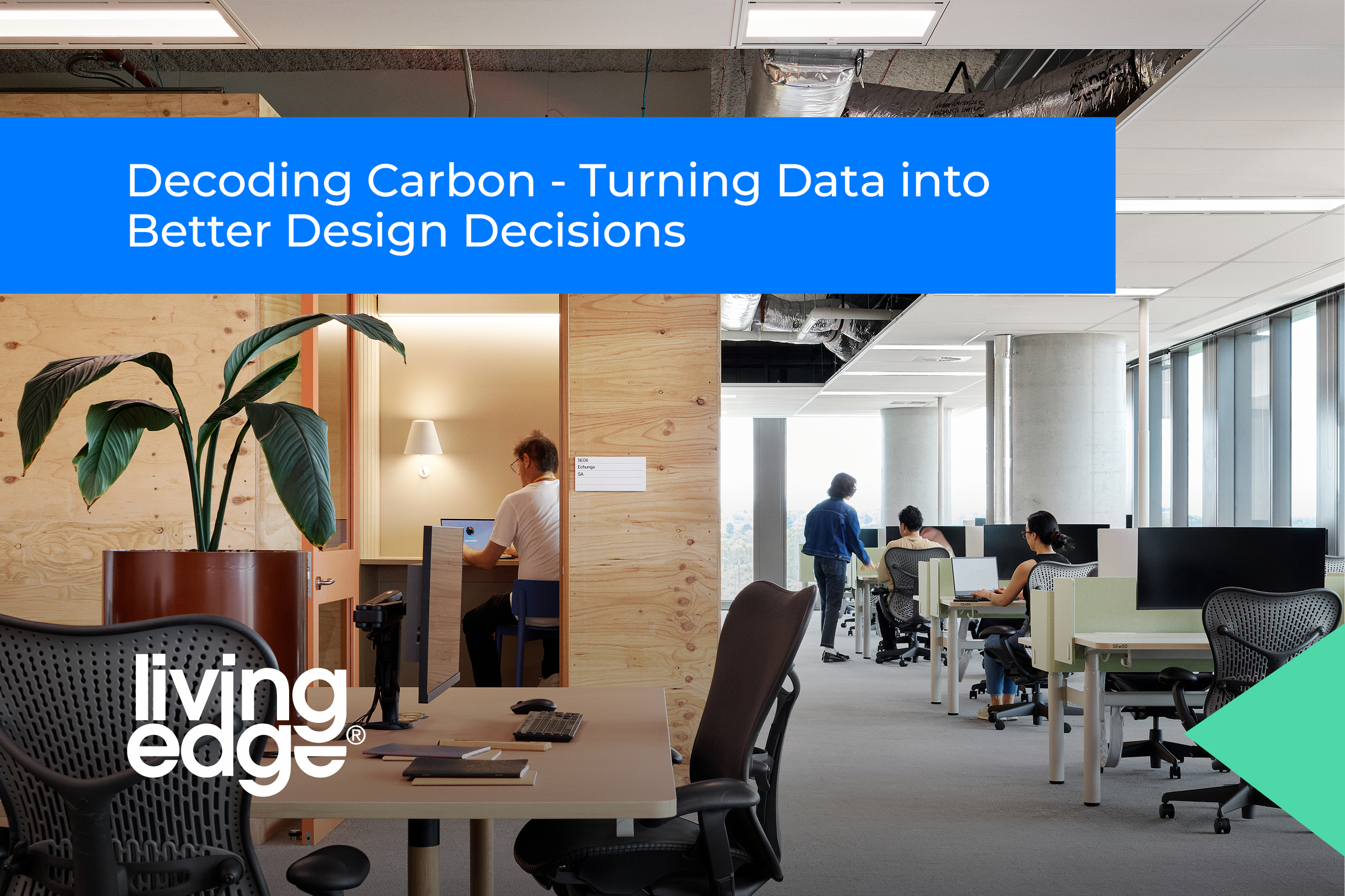
In assessing the sustainability of commercial building projects, it’s important to recognise the impacts of fitouts.
In terms of embodied carbon, such choices are as likely to be problematic as external materials, structural elements, and so on. Indeed, thanks to the fast pace of tenancy changes, commercial fitouts involve one key challenge – associated with ‘replaced embodied energy’ – that is not as relevant to materials specified elsewhere.
The problem for those working on projects of this type is that minimising embodied carbon is not necessarily an easy task. Working through the options, the technical terms and jargon to identify genuinely sustainable design strategies and material choices can be complicated.
The purpose of this session of CPD Live is to simplify this process and explain the effectiveness, in this context, of carbon data.
Beginning by outlining the ways commercial fitouts typically contribute to total carbon emissions, our speakers will then define this term ‘carbon data’. Outlining the value of tools like ‘Green Star Fitouts’ and pointing to real-life examples to illustrate their points, they will explain how to turn carbon data into better design decisions.
At the end of this presentation, you should be able to:
- Outline the ways commercial fitouts contribute to the overall carbon emissions of commercial buildings
- Explain the value of carbon data and the ‘Green Star Fitout’ scheme in this context
- Identify the types of carbon data available and the ways to interpret them
- Explain how this data be used to design out carbon in commercial fitout projects
This presentation will deliver outcomes related to the following Competency/s from the National Standard of Competency for Architects 2021:
PERFORMANCE CRITERIA FOR PRACTICE MANAGEMENT AND PROFESSIONAL CONDUCT
PC 10 – Demonstrate understanding of the whole life carbon implications of procurement methods, materials, components and construction systems.
PERFORMANCE CRITERIA FOR PROJECT INITIATION AND CONCEPTUAL DESIGN
PC 24 – Be able to prepare and analyse project development options in response to a project brief – its objectives, budget, user intent and built purpose, risk and timeframes, including environmental sustainability considerations.
PC 28 – Be able to draw on knowledge from building sciences and technology, environmental sciences and behavioural and social sciences as part of preliminary design research and when developing the conceptual design to optimise the performance of the project.
PC 35 – Be able to assess operational and embodied carbon implications of materials, components, construction systems and supply chains (including transport) to achieve net zero whole life carbon when developing design concepts. This includes integrating relevant consultant expertise and advising on the impact of chosen materials, components and systems on carbon outcomes.

Guy Walsh
Sustainability Strategist – Living Edge
With more than 15 years of experience in the contract furniture industry, Guy has helped global organisations deliver Green Star, LEED and WELL-certified fit-out projects in the UK and Australia. As a Sustainability Strategist, Guy leads the Living Edge programme ‘LivingOn‘. He passionately advocates for the circular economy and its potential to create a paradigm shift in how we consume furniture products.

Esther Bailey
Chief Operating Officer – Rebuilt
Esther brings deep expertise in sustainability leadership and climate strategy to Rebuilt. She has spent her career helping ESG practitioners in the built environment drive ambitious action underpinned by meaningful data insights.
She has led major initiatives with a host of government and peak bodies, including at NSW Treasury, NABERS and as Chair of the Green Star Materials Expert Reference Panel, to deliver data tools, frameworks, and policies that transform markets and support the shift to net zero.
At Rebuilt, Esther thrives on making sure the platform delivers fast, credible, and cost-effective carbon reporting that empowers manufacturers, specifiers, and corporates to act with confidence.