
DAY 2 Services using Applied Principles of Circularity
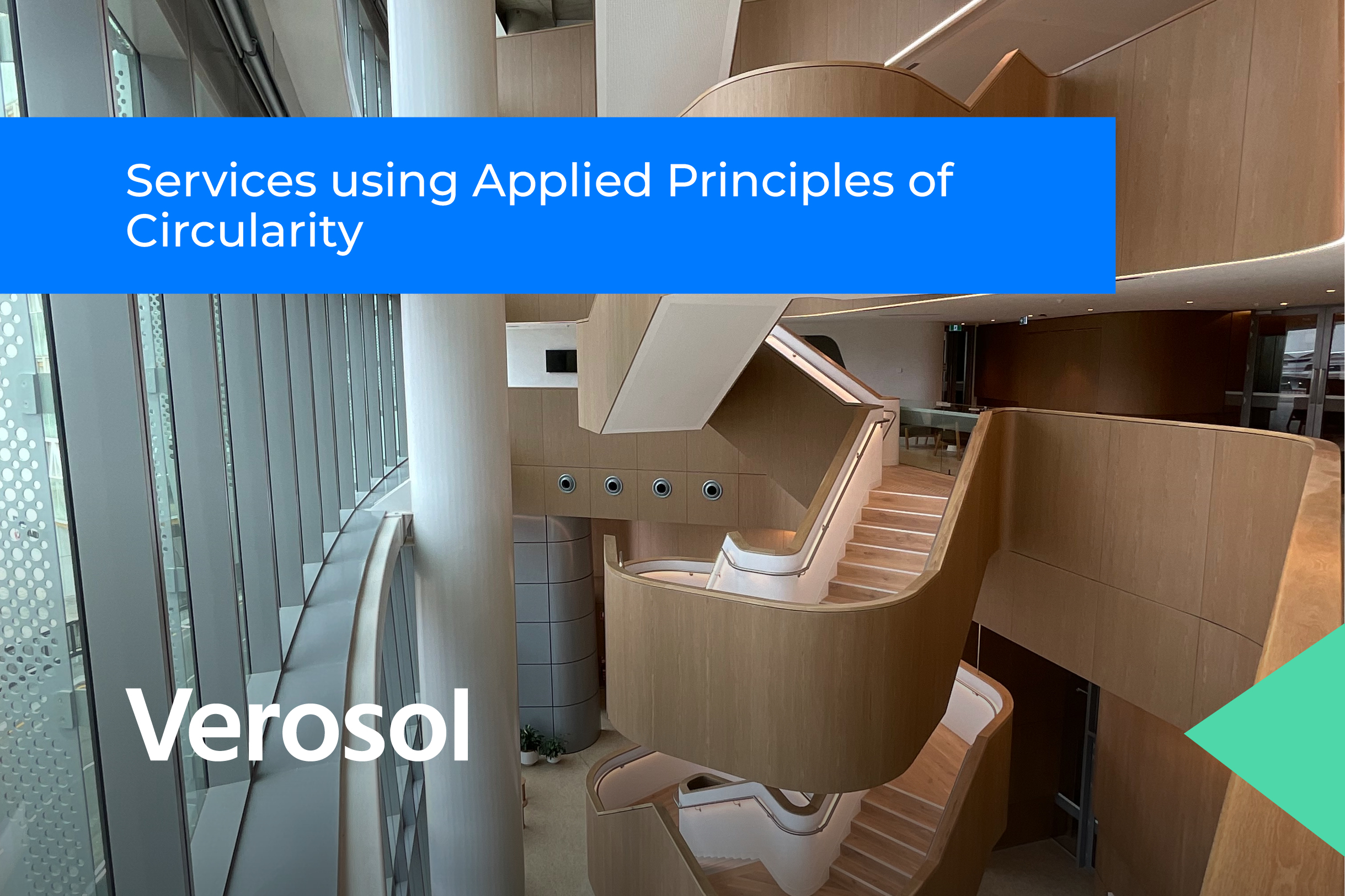
The term ‘Day 2 Services’ refers to everything that occurs once a project’s construction phase is complete and the building in question is fully operational. It refers to daily functions, including those associated with wiring and electricals, plumbing, automated systems, and HVAC.
Effective Day 2 services have environmental benefits. Beyond ensuring the efficiency of systems, they also optimise energy consumption. By ensuring blinds are down during the hottest part of the day, for example, they reduce reliance on air conditioning.
As we shall see in this session, the link between an effective Day 2 focus and sustainability extends beyond operational concerns to the notion of circularity – the closed-loop model in which materials and products are kept for as long as practical then, where possible, re-used or recycled.
By optimising Day 2 services, it becomes possible to extend the lifecycles of relevant systems before removing them to be re-used or recycled. It becomes feasible to optimise building fitouts and upgrades, and ensure continuous, incremental improvement of both efficiency and customer experience.
Noting where the construction sector stands right now when it comes to circularity, our speakers will identify the Day 2 options currently available. Outlining how to incorporate them into architectural projects, they will quantify their capacity to contribute to a genuinely sustainable future.
At the end of this presentation, you should be able to:
- Define the term ‘Day 2 Services’ and explain its relevance to architects
- Define the term ‘Circularity’ and explain its relevance to architects
- Outline the role Day 2 Services can play in improving operational efficiency and minimizing carbon footprints
- Explain the ways an effective Day 2 focus can contribute to circularity and a more sustainable built environment
This presentation will deliver outcomes related to the following Competency/s from the National Standard of Competency for Architects 2021:
PERFORMANCE CRITERIA FOR PROJECT INITIATION AND CONCEPTUAL DESIGN
PC 28 Be able to draw on knowledge from building sciences and technology, environmental sciences and behavioural and social sciences as part of preliminary design research and when developing the conceptual design to optimise the performance of the project.
PC 31 Be able to identify, analyse and integrate information relevant to environmental sustainability – such as energy and water consumption, resources depletion, waste, embodied carbon and carbon emissions – over the lifecycle of a project.
PC33 Be able to investigate, coordinate and integrate sustainable environmental systems – including water, thermal, lighting and acoustics – in response to consultants’ advice.
PC 35 Be able to assess operational and embodied carbon implications of materials, components, construction systems and supply chains (including transport) to achieve net zero whole life carbon when developing design concepts. This includes integrating relevant consultant expertise and advising on the impact of chosen materials, components and systems on carbon outcomes.
JULIAN SUTHERLAND
Head of sustainable Assets – APEC
Julian is a highly accomplished Chartered Building Services Engineer and sustainability expert with 35 years of experience in the built environment. As a Fellow of the Chartered Institution of Building Services Engineers (CIBSE) and a Certified Passivhaus Designer, he brings a wealth of knowledge to his role as Lead of the JLL Sustainable Assets APAC team within the sustainability consulting business.
Based in Sydney, Australia, Julian specializes in sustainable design, environmental engineering, net zero carbon building design, low carbon masterplanning, and client design advisory. His expertise spans existing building retrofit, decarbonization strategies, and enhancing future asset value.
Throughout his career, Julian has completed high-performance buildings globally, working for leading multi-disciplinary consulting firms. His practical experience extends to building his own Passivhaus in the UK, demonstrating his commitment to sustainable living principles.
With his extensive experience, diverse skill set, and leadership in sustainable building practices, Julian continues to make significant contributions to the field, driving the industry towards a more sustainable and environmentally responsible future.
Neil Krotzsch
Head of Automation – Verosol
Neil Krotzsch is an Automation Mastermind with 40 years + experience in Electrical Engineering, Design and Delivery of automated solutions; including 20 years in the Australian Building and Window Furnishing Industry. Neil is an accredited Trainer and Assessor (TAE), a registered Quality Lead Auditor with Exemplar Global and a Green Star Accredited Professional (GSAP).
He enjoys using his skills and expertise to collaborate with those at the forefront of design, working on bespoke projects, to achieve excellence in function and performance, delivering an unsurpassed customer experience.
His axiom ‘Don’t do different things, just do things different’ has led the way throughout his career. Delivering major projects such as 1 Bligh Street (Sydney), One Sydney Harbour (Sydney), Barangaroo International Towers (Sydney), QEII (Brisbane), are only a few outstanding examples of his achievements.
Verosol offers a wonderful opportunity to deliver products that align with his personal sustainable ethos.