
Coastal Architecture – Designing for Salt, Sun & Storm
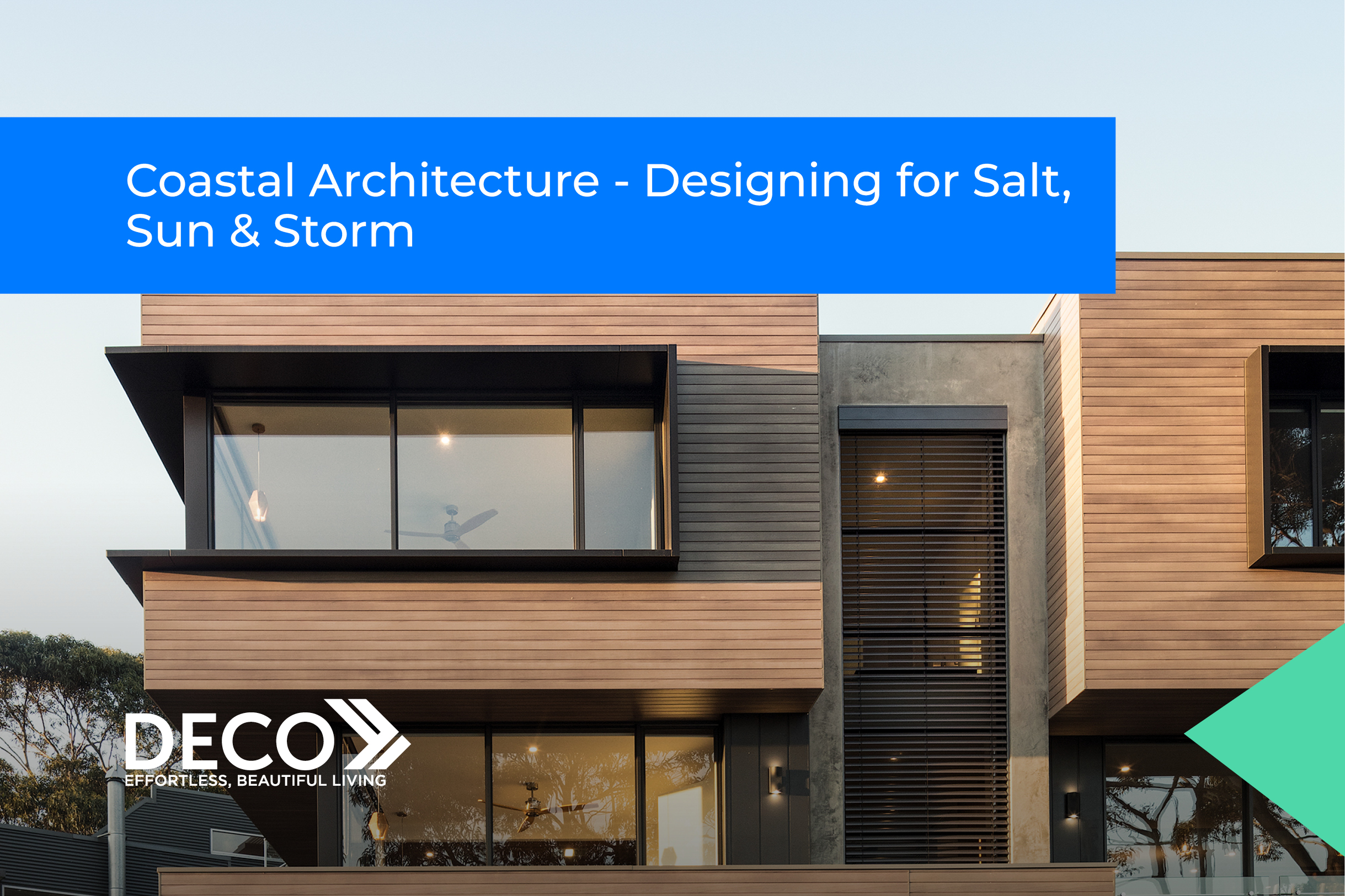
As is often noted, despite its massive interior, Australia is very much a coastal loving nation. All our major cities are located by the sea, and as the most recent ‘State of the Environment Report’ points out, approximately 85 per cent of Australians live within 50 km of the coast.
Drilling deeper into the same document, we see that 50 percent us live within just 7 km of the sea, while one in 10 residential homes can be found within 1 km of the sea.
Beyond the lifestyle attractions, this last statistic has some challenging implications. For buildings, proximity to the ocean equates to a range of problems, including a higher incidence of wind and sand damage, moisture-related issues such as damage caused by mould and pests, and salt-induced corrosion.
In this session of CPD Live, “Coastal Architecture – Designing for Salt, Sun & Storm” we examine all these issues and consider the best ways of addressing them. Pointing to real-life case studies to illustrate their points, our speakers highlight the various design strategies, building products, and materials that are worth considering in this context. They explain how architects can help minimise the negative consequences of coastal proximity and empower Australians to continue their love affair with the beach lifestyle.
At the end of this presentation, you should be able to:
- Understand how coastal environments influence building performance and durability
- Recognise how environmental conditions vary with distance from the coastline and the implications for building design and material selection
- Identify and outline the regulations that apply to the construction of various types of buildings in coastal environments
- Explain the various design and material-focused strategies that specifiers can follow to enhance the longevity, resilience, and performance of buildings located near the coast.
This presentation will deliver outcomes related to the following Competency/s from the National Standard of Competency for Architects 2021:
PERFORMANCE CRITERIA FOR PRACTICE MANAGEMENT AND PROFESSIONAL CONDUCT
PC 12 – Provide independent, culturally responsive and objective advice in accordance with relevant building codes, standards, technical specifications and guidelines, and planning regulations, including climate change implications, across all aspects of architectural practice.
PC 16 – Be able to apply risk management and mitigation strategies – including safety in design, project risk, requirement for resilience from the impacts of climate change and appropriate insurances – across architectural services
PERFORMANCE CRITERIA FOR PROJECT INITIATION AND CONCEPTUAL DESIGN
PC 24 – Be able to prepare and analyse project development options in response to a project brief – its objectives, budget, user intent and built purpose, risk and timeframes, including environmental sustainability considerations.
PC 28 – Be able to draw on knowledge from building sciences and technology, environmental sciences and behavioural and social sciences as part of preliminary design research and when developing the conceptual design to optimise the performance of the project