
Balcony Drainage Systems in Multi Residential Design – Challenges, Solutions and the Impact of NCC 2025
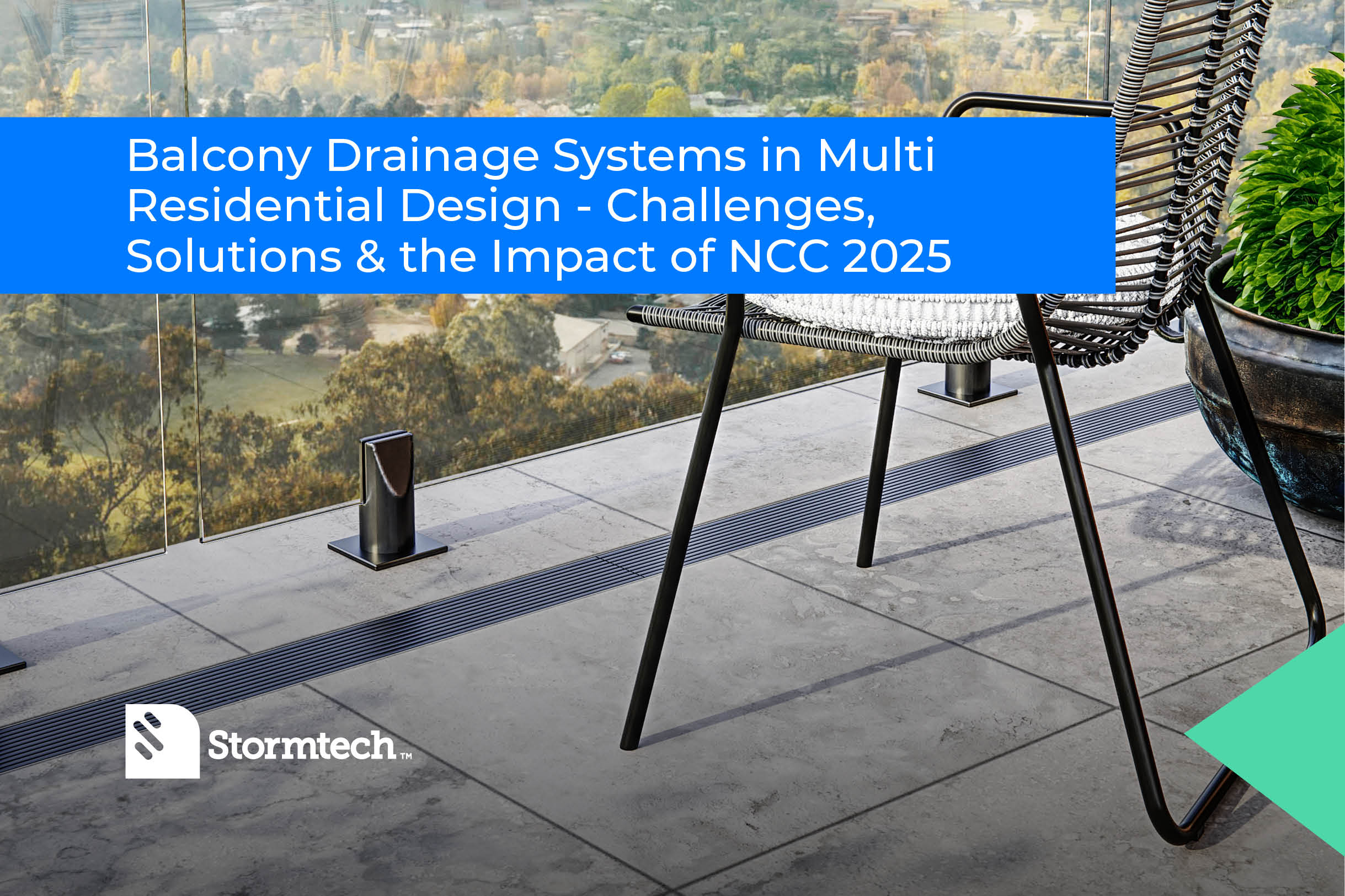
Balconies are a popular feature in multi-residential buildings, offering occupants an appealing blend of indoor and outdoor living. However, these spaces present specific challenges in terms of drainage. Without effective water management systems, they are susceptible to water accumulation, which in turn, can lead to structural issues and building degradation.
As multi-residential developments continue to expand across Australia, the complexity of balcony designs has grown. This has resulted in a higher number of building defects, particularly in relation to waterproofing failures, ingress and leaks. Such issues are a growing concern for architects, developers, and designers striving to create durable and reliable structures.
Addressing these defects is critical, as they impact not only the longevity of the building in question but also the satisfaction of owners and occupants. The fact that poor drainage design can result in costly maintenance underscores the importance of considering water management early in the design phase of multi-residential balcony projects.
In this session of CPD Live, we look at why balconies leak and the drainage solutions that will prevent water accumulating and entering the indoor environment. We also consider the upcoming changes related to this field in the 2025 update of the National Construction Code (NCC).
At the end of this presentation, you should be able to:
- Identify the main drainage issues associated with balconies on multi residential buildings
- Outline the potential consequences of not addressing these issues
- Outline the ways NCC 2025 deals with drainage in multi residential buildings
- Explain why linear drainage represents a good choice in these applications
(PROJECT INITIATION AND CONCEPTUAL DESIGN PC 18, PROJECT INITIATION AND CONCEPTUAL DESIGN PC28, DETAILED DESIGN AND CONSTRUCTION DOCUMENTATION PC43, DETAILED DESIGN AND CONSTRUCTION DOCUMENTATION PC 46)